


Growing Strawberries in Containers: A Beginner's Guide for Small Spaces
Spring is the perfect time to start growing strawberries in containers, especially if you're working with limited space like a balcony, patio, or windowsill. The good news is that strawberries are forgiving plants that respond brilliantly to container growing—you just need to get a few basics right. I've grown strawberries in everything from old yoghurt pots to proper fabric bags, and I'm here to share what actually works.
Common Beginner Mistakes to Avoid
Most people struggle with strawberry containers because of a handful of preventable errors. Overwatering is the biggest culprit—containers need to dry out slightly between waterings, or you'll end up with root rot. Using garden soil instead of proper potting compost will compact and drain poorly, which strawberries absolutely hate. Planting in containers that are too small restricts root growth and means you're watering constantly. Finally, don't try to grow five different varieties at once when you're starting out. Pick two or three proven types and focus on doing those well.
Choosing the Right Container Size
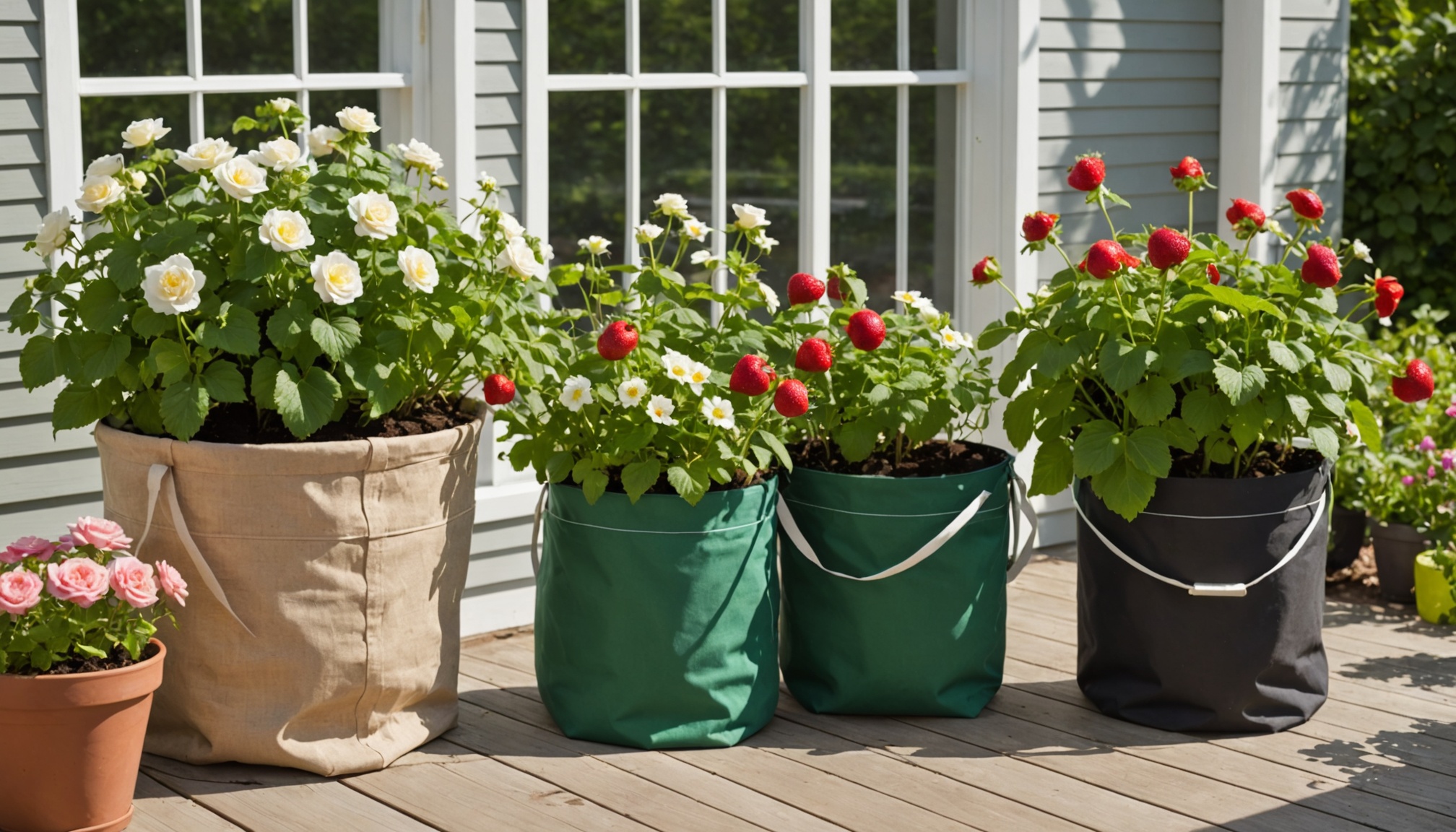
Container choice really does make a difference. For strawberries, I'd recommend a minimum of 20-25cm (8-10 inches) diameter and depth for each plant. The Vivosun 5-Gallon Fabric Grow Bags are brilliant for this—the breathable fabric lets air circulate around the roots and prevents the circling problem you get with rigid plastic pots. If you're on a tight budget, recycled containers work fine as long as they have drainage holes drilled in the bottom. Terracotta is attractive but dries out quickly, so you'll water more often. Whatever you choose, make sure drainage is genuinely good—waterlogged roots kill strawberries faster than anything else.
Getting the Compost Right
Always use proper potting compost, never garden soil. Garden soil compacts in containers and blocks drainage terribly. A peat-free mix like Westland Peat Free Multi-Purpose Compost works well and is better for the environment. To stretch your budget, mix it 50/50 with perlite or coarse sand—this improves drainage without costing much. Fill your container to about 5cm below the rim so you have space to water without spillage.
Budget-Friendly Tips
You genuinely don't need expensive equipment. Start with seeds rather than plug plants—they're cheaper and you get more variety. Collect rainwater in a butt or bucket if you can; it's better for plants than tap water and completely free. A small watering can with a removable rose is useful for controlled watering without oversaturating. Repurposed pots, old buckets with drainage holes, or mini terracotta pots all work perfectly well while you're learning.
Making the Most of Limited Space
A small balcony or patio doesn't have to mean fewer plants. Stack containers on tiered shelves, use wall space with hanging baskets, or try vertical planter pockets to triple your growing area without using extra floor space. Compact and dwarf strawberry varieties are bred specifically for containers and produce nearly the same yields in a fraction of the space. Look for varieties like 'Mara des Bois' or 'Albion'—they're smaller but prolific.
Getting Started This Spring
Start with one or two containers and scale up once you see how it goes. Choose the sunniest spot available—strawberries need at least 6-8 hours of direct sunlight daily. Water when the top inch of compost feels dry, usually every 2-3 days in spring depending on weather. Once you've got the basics sorted and you're harvesting properly, then expand your operation. You'll be picking fresh strawberries from your balcony in just a few weeks.